Clyde
Approx. Mile 208–211 along the Erie Canal
Barge Canal · 1918 — the canal runs in the bed of the Clyde River itself. Which canal is this? →
Clyde is a quiet rural village in the Town of Galen, Wayne County, and the kind of stop the Erie Canal was built around long before it became a cruising route. The channel here runs through the canalized Clyde River — when the waterway was enlarged to Barge Canal dimensions around 1915, engineers pushed the channel south into the river's own bed, so the water you travel is as much river as canal.
A century earlier this was a glass town. The Clyde Glass Works operated along the canal from 1828 to 1922, and the village still carries that industrial memory in its markers and street names. The anchor structure for boaters is Lock E26, the Clyde Lock, which lifts vessels just 6.0 feet — one of the smallest lifts on the entire Erie Canal. Come here for the calm, not the amenities: this is a peaceful low-services tie-up, not a marina town.
The village that ran on glass, on a canal that became a river
Some canal towns shipped what the land around them grew. Clyde shipped what it made from sand and fire. For the better part of a century this quiet corner of Wayne County ran on glass, and the reason it could is the same reason the village exists at all: the Erie Canal ran past its door, and a boat could carry away things too heavy and too fragile to travel any other way.
The story starts with a partnership. In 1827 William S. DeZeng and James R. Rees went into business together, and on March 27, 1828, they laid the cornerstone of a glasshouse on the south bank of the canal. What rose there became the Clyde Glass Works, and in its first years it made window glass by a method that has since all but vanished from the world — the cylinder, or “broad,” process. A gaffer gathered a great gob of molten glass on the end of a blowpipe and, by blowing and swinging it over a pit, drew it out into a long hollow cylinder as much as a yard or more in length. The ends were cut off, the cylinder was slit down one side, and then, reheated in a flattening oven, it was allowed to sag open and settle flat into a single rectangular sheet. It was hot, skilled, physically brutal work, and for decades it was how most of the window glass in America got made.
A works like this needed exactly what Clyde had. It needed sand and fuel and a steady oven, and above all it needed a way to move a boxcar’s worth of glass to distant markets without shattering it on a rutted road. The canal was the answer to all of it — raw materials in, finished panes out, floated east and west on water smooth enough to trust with panes of glass. When cheaper, machine-made window glass eventually undercut the hand-blown cylinder trade, the works did what canal-side factories learned to do: it changed its product. Clyde turned to bottles, and then to the fruit jars — Mason jars — that put up a nation’s tomatoes and peaches. The plant kept blowing glass in one form or another until it finally wound down in the early 1920s.
It nearly ended sooner. On July 24, 1873, fire gutted the works. In a company town, a burned factory is often the end of the town’s luck; here it was not. The Clyde Glass Works was rebuilt at once, within the year, and went straight back to the furnaces — a small, telling measure of how much the village depended on the fire it had learned to control.
The other curiosity here is the water itself. Look at a boat resting at the Clyde dock today and you are not, strictly speaking, looking at a canal. When the Erie was rebuilt to the vast dimensions of the Barge Canal in the 1910s, the engineers did something they did in many places along this route: rather than dig a fresh channel, they moved the waterway into a river that was already there. At Clyde they shoved the line south into the bed of the Clyde River itself. The modern “canal” here is a canalized river — a natural stream held at navigable depth — and the anchor structure, Lock E26, exists mostly to meter that river across a single gentle step. Its lift is just six feet, among the very smallest on the whole 360-mile system. Where Lockport hauls boats up a cliff and Little Falls climbs a gorge, Clyde barely climbs at all. Which canal is this, exactly? — the honest answer here is a river wearing a canal’s number.
And mind that number. It is tempting to assume the lock at Clyde has always been “the Clyde lock,” but the Barge Canal renumbered everything. The E26 boaters lock through today is a twentieth-century structure. It is not the older “Lock 53” of the Enlarged Erie — the mid-1800s canal — that served Clyde before it. Same village, same river valley, different canal and a different number entirely. It is the kind of overlap that runs the length of this waterway: peel back one canal at Clyde and you find another beneath it, and beneath the glass town, the river that was here before either.
In this stretch
Places to Eat
Provisions & Shops
Things to see & do
Arriving by boat
The Village of Clyde Public Dock sits at roughly canal mile 211, on the south side of the channel in a park-like setting. Reports describe floating docks plus a fixed wall, with electric, water, pumpout, and a bath building — but confirm those services in season, as the dock details come from listings that don't always reflect current conditions. Like most NYS Canal Corporation terminal walls, tie-ups here are generally free for up to 48 hours in a calendar month, with services such as electric, water, and pumpout available for a fee.
Lock E26 (Clyde Lock) lies roughly 3 miles southeast of the village and lifts just 6.0 feet. The lockmaster line is 315-923-9720. NYS Canal locks generally monitor VHF, but the specific working channel for E26 wasn't confirmed in research — check canals.ny.gov Navigation Information before you rely on radio contact. Fuel availability at the Clyde dock and the section's controlling depth are likewise unconfirmed; treat Clyde as a place to top off elsewhere and arrive with what you need. No designated anchorage was verified in this stretch, so plan on the village wall rather than swinging on the hook.
By bike & foot
Clyde sits directly on the Erie Canalway Trail, the east–west spine of the Empire State Trail. The riding through here is easy and flat — the Clyde-to-Rochester run is described as paved and stonedust, the kind of surface that suits loaded touring bikes and casual day riders alike. One quirk worth knowing: the trail resource lists Clyde at trail mile marker 141.5, which is the trail's own baseline and differs from the canal navigation mile (around 211). Both are correct; they simply measure different things.
Access is generous for a village this size. Black Brook Park has restrooms, Clyde Canal Park offers camping, and Lauraville Landing provides parking and restrooms, while the Clyde Biker Welcome Center handles visitor questions. There's a bike maintenance and repair station at Clyde Village City Hall, and the Clyde-Savannah Public Library at 204 Glasgow St for a quiet break. East of town the trail peels away from the canal onto scenic country roads through Amish country — Lyons lies about 7.6 miles west, Montezuma roughly 12 miles east. No dedicated bike shop in Clyde was confirmed, so carry your own spares.
By paddle
Paddlers may lock through any Erie Canal lock, Lock E26 included, for free and without a permit. Below the lock, the Clyde River winds southeast on and off the canal, running from Bentley Road in the Town of Galen down toward the Montezuma National Wildlife Refuge near NY Route 89 before meeting the Seneca River in the Town of Tyre — a genuinely wild, birdy stretch of water.
Formal launch sites weren't confirmed in research. Lauraville Landing and Clyde Canal Park are canal-side access points and the logical places to put in, but scout them in person before committing a heavily loaded boat.
By car
Clyde sits at the junction of the Erie Canal and NY Route 31, with Routes 31 and 414 forming the main road corridors. Drive-in parking is available at Black Brook Park, Clyde Canal Park, and Lauraville Landing. Lock E26 is off Tyre Road, roughly 2¾ miles southeast of the NY 414 bridge (about 3 miles from the village center) — an easy detour for anyone who wants to watch a small lock work.
Where to eat
Clyde keeps a short, honest roster of everyday spots — confirm hours and current operation before you make a trip of it, as these come from listings rather than firsthand visits. El Canal Mexican Restaurant and Antonio's Pizzeria cover the sit-down cravings, while Bennings Clyde Erie Diner and the Blockhouse Diner — listed right on the Erie Canal bike trail — handle the classic diner plate. For morning coffee and breakfast, Kee Kee Run Cafe is the local call. Papa's Place rounds out the pizza options.
Where to sleep
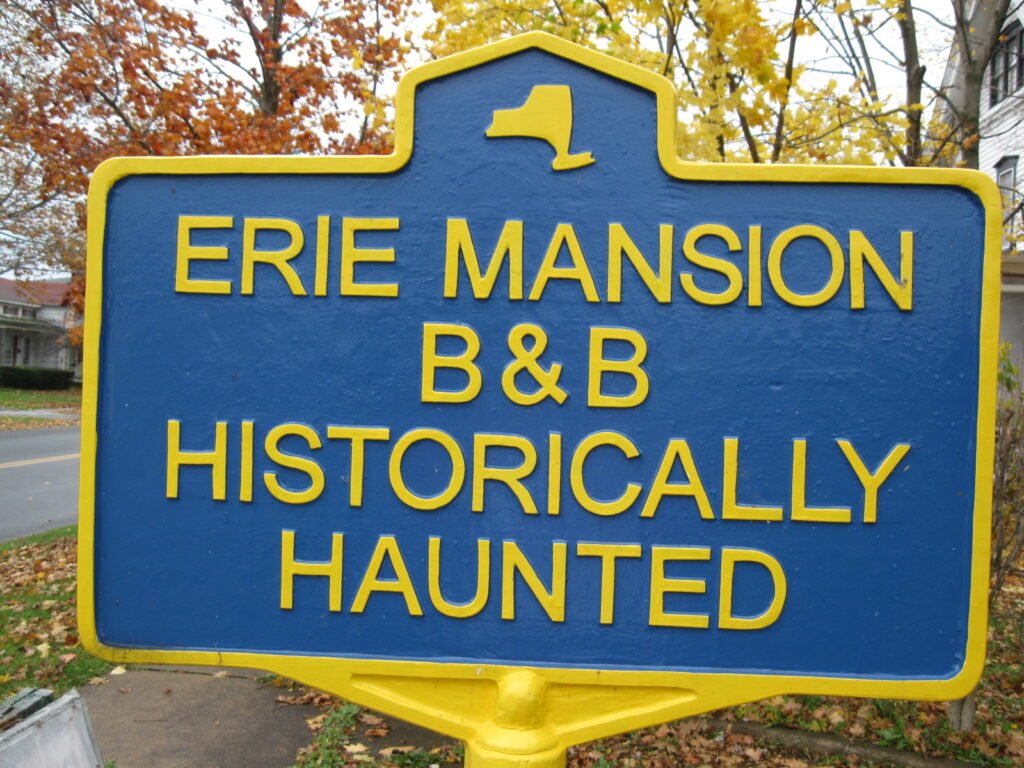
The standout stay is the Erie Mansion Bed & Breakfast at 39 West Genesee Street — a historic 1858 property, originally the Smith-Ely Mansion, running to roughly 12,000 square feet of restored suites, each with a private bath. It takes reservations, welcomes group bookings, and accepts credit cards; phone (315) 406-1999, online at eriemansion.com. As an independent B&B it's direct-book only. For chain hotels, look to the larger towns nearby — Lyons, Waterloo, and Geneva are the more likely bets, though confirm before you count on a room.
What to see
Clyde's history is best read on foot. The Clyde Glass Works site and its historical markers — including "Clyde Glass Works" and "The Erie Canal in Clyde" — document a glass-and-canal heritage that once employed dozens of men and boys along the water. The Galen Historical Society is the place to dig deeper into the story of the village and town.
On the water, Lock E26 (Clyde Lock) is a working, viewable structure and one of the smallest lifts on the canal, and the village canal waterfront and public-dock park make a pleasant place to sit and watch traffic pass. It's a modest list, and that's the point: Clyde rewards the traveler who slows down.