The Wedding of the Waters: The 1825 Ceremony That Announced America to Itself
When the Erie Canal opened, New York married Lake Erie to the Atlantic with a keg of water, a relay of cannon, and a spectacle no young nation had ever attempted.
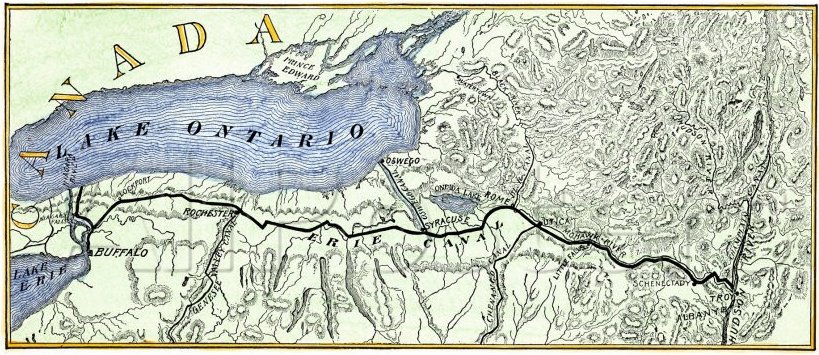
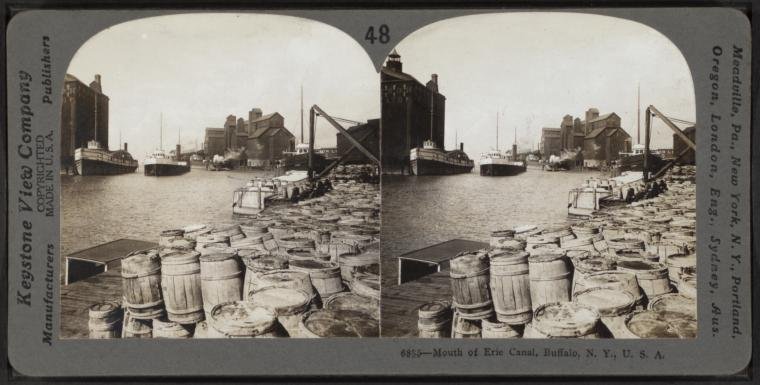
On the morning of October 26, 1825, a cannon fired at Buffalo — and the whole length of New York State answered it.
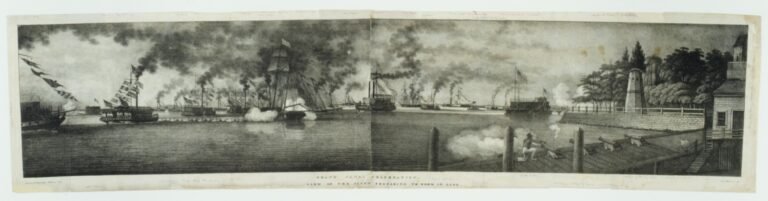
The gun stood at the point where the new Erie Canal drew its first water from Lake Erie. When it spoke, the artilleryman at the next station, ten or fifteen miles down the line, heard it and fired his own. The next man heard that one and fired. So it went, gun after gun, all the way across the state and down the Hudson to New York City: a relay of cannon converting a boat’s departure into a sound that traveled 500 miles faster than any message in American history had ever moved. This was the “Grand Salute,” and it was the overture to the strangest, grandest party the young republic had yet thrown for itself.
The canal was finished. After eight years of digging — the project skeptics had branded “Clinton’s Ditch” and “Clinton’s Folly” — New York had linked the Great Lakes to the Atlantic, and it intended to make sure the world noticed.
The boat that carried a state’s pride
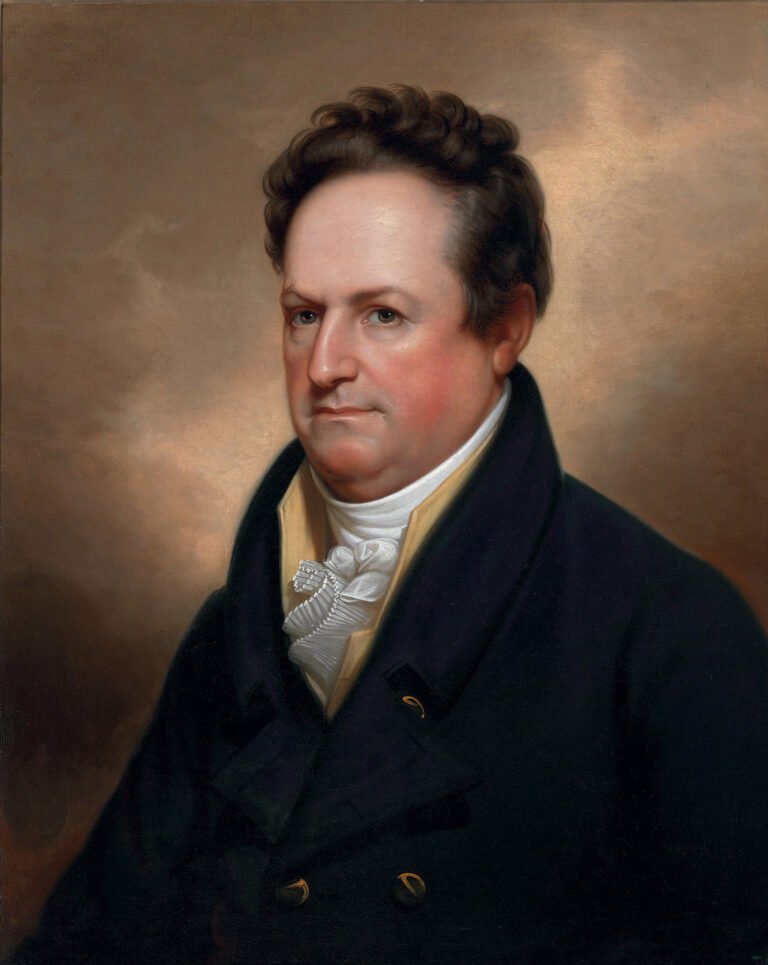
Leading the flotilla out of Buffalo was a packet boat named the Seneca Chief. Aboard her rode Governor DeWitt Clinton — the man who had staked his career on the canal — along with Jesse Hawley, the merchant whose early essays, written from inside a debtors’ prison, had helped argue the whole improbable idea into existence.
The Seneca Chief did not travel alone. She was joined at the head of the procession by the Superior, the Commodore Perry, and the Buffalo, and gathered more boats as she went — the Niagara, the Young Lion of the West, and a floating menagerie called Noah’s Ark. That last vessel was exactly what its name promised: a boat freighted with living emblems of the American frontier the canal had just opened. By the accounts that come down to us, she carried a bear, two eagles, two fawns, and an assortment of fish and birds, along with two Native American youths — a curated, and by modern eyes uncomfortable, tableau of the “wild” West being ceremonially delivered to the seaboard East.
Tucked aboard the Seneca Chief was the object that gave the whole affair its name. Before leaving Buffalo, two city aldermen had procured two barrels of pure Lake Erie water, to be carried the length of the canal and, at journey’s end, poured into the sea.
The cannon that outran the boat
The Grand Salute is the detail that best captures the ambition of the day — and it comes with a genuine puzzle the sources will not resolve for us.
Gunners were stationed at intervals of roughly ten to fifteen miles along the canal and the Hudson, each within earshot of the next, each ready to fire the instant he heard the report before him. The chain began in Buffalo and ended at New York, then reversed and ran all the way back. How long did the signal take to cross the state?
Here the record splits. The specialist site eriecanal.org, drawing on period accounts, gives a precise figure: the salute traveled from Buffalo to New York in one hour and twenty-five minutes — about 85 minutes — with the return salute taking just as long. Other histories round it to a “90-minute cannonade.” The two figures sit close enough to be describing the same event through slightly different arithmetic; we cite the range of roughly 85 to 90 minutes rather than pretend to a precision the sources don’t share. Either way, the meaning was the same. A boat had left Buffalo, and before it had cleared the harbor, the news of its leaving had already reached the Atlantic.
Ten days down the ditch
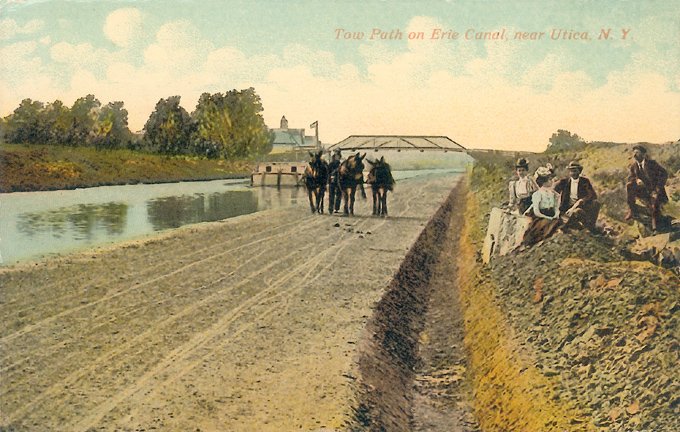
The boats themselves moved at the unhurried pace of the canal — four miles an hour behind mule teams, then faster on the open Hudson. Their progress east was less a voyage than a rolling ovation. At Waterford, where the canal met the Hudson, and at every town before and after, crowds turned out to cheer the flotilla through. Villages that owed their sudden existence to the canal watched the men who had built it glide past.
The procession reached New York City on November 4, 1825. The harbor met it with what one account called nearly every vessel in port “gaily decked with colors of all nations,” a floating forest of flags assembled to escort the canal boats to the ceremony offshore.
The marriage at Sandy Hook
The rite itself took place out where the harbor opens to the Atlantic, off Sandy Hook. There, from the deck of a vessel surrounded by the assembled fleet, Governor Clinton lifted one of the Lake Erie barrels and poured it into the ocean — the “Wedding of the Waters.”
Clinton’s words survive in the official memoir of the celebration, compiled by Cadwallader Colden, and they are worth quoting as he spoke them:
This solemnity at this place on the first arrival of vessels from Lake Erie, is intended to indicate and commemorate the navigable communication, which has been accomplished between our Mediterranean Seas and the Atlantic Ocean, in about eight years, to the extent of more than four hundred and twenty-five miles, by the wisdom, public spirit, and energy of the State of New York; and may the God of Heavens and Earth smile most propitiously on this work, and render it subservient to the best interests of the human race.
Then came a flourish pure to the ambitions of the age. Dr. Samuel Latham Mitchill — physician, naturalist, and one of the era’s great scientific showmen — stepped forward with a second set of bottles. Into the sea he emptied waters he had gathered, or claimed to have gathered, from the great rivers of the world: the Ganges and the Nile, the Amazon, the Rhine, the Thames, the Seine, the Nile’s overflowings and the Orinoco’s flood — the whole watery commerce of the globe symbolically united with New York’s harbor. “I pronounce this connection,” he declared, “Blessed; for perpetual and incalculable will be its benefits.”
It was theater, and everyone knew it was theater. It was also a statement of arrival. A state that a decade earlier had been mocked for digging a trench through the woods now stood at the edge of the Atlantic claiming a seat among the commercial nations of the earth.
The water that went back
The Seneca Chief did not return empty. For the trip home she was loaded with a keg of Atlantic seawater, elaborately decorated and labeled — as the story is handed down — “Neptune’s Return to Pan,” the sea god sending his compliments back to the god of the woods. When the boat reached Buffalo, Judge Samuel Wilkeson — a driving force behind Buffalo’s rise and its future mayor — poured the ocean water into Lake Erie, completing the exchange. The marriage had been consummated in both directions.
What the ceremony actually announced
Strip away the pageantry and the Wedding of the Waters marked something real. The finished canal ran 363 miles from the Hudson to Lake Erie, climbing through 83 lift locks, and it had been built in about eight years — the figure Clinton named at Sandy Hook (“more than four hundred and twenty-five miles”) counted the full Buffalo-to-New-York water route, canal and river together, not the canal alone. Within a few short years it would cut the cost of moving freight between the interior and the coast by roughly ninety percent, and repay its enormous construction debt out of tolls.
But on November 4, 1825, none of the settlers, cities, and fortunes the canal would go on to make had happened yet. What had happened was the spectacle — the cannon relay, the flotilla, the two barrels of lake water crossing a state to be married to the sea. For one autumn week, a still-young and largely rural republic staged an act of civic imagination on a scale it had never attempted, and pulled it off. The Wedding of the Waters was America, for the first time, announcing itself to itself: a country that could conceive of something enormous, build it against the doubts of presidents, and then throw a party big enough to match.
Not bad for a ditch.
Gallery
Sources
eriecanal.org — Historical Images of the Erie Canal (Oct 26 1825 Buffalo departure at cannon signal, cannon relay Buffalo-to-NYC in 1 hr 25 min & equal return, Nov 4 1825 arrival, Clinton pouring Lake Erie water into Atlantic): https://www.eriecanal.org/general-1.html; Wikipedia — Erie Canal (corroboration: Seneca Chief lead boat, DeWitt Clinton aboard, '90-minute cannonade' figure, return keg of Atlantic water poured into Lake Erie by Judge Samuel Wilkeson): https://en.wikipedia.org/wiki/Erie_Canal; Wikipedia — Seneca Chief (corroboration: Jesse Hawley aboard, flotilla boats Superior/Commodore Perry/Buffalo/Niagara/Young Lion of the West/Noah's Ark, cannons spaced 10–15 mi apart, Oct 26 1825 departure & Nov 4 1825 NYC arrival): https://en.wikipedia.org/wiki/Seneca_Chief; Cadwallader D. Colden, Memoir (1825), Appendix, via eriecanal.org — verbatim Clinton proclamation ('This solemnity at this place…'), Dr. Samuel Latham Mitchill's world-rivers ceremony and 'I pronounce this connection — Blessed' quote, two barrels of Lake Erie water procured at Buffalo: https://www.eriecanal.org/texts/Colden/Appendix.html; Erie Canalway National Heritage Corridor / NPS — History & Culture (363 mi, 83 lift locks, built 1817–1825 / eight years, Clinton as champion): https://eriecanalway.org/learn/history-culture; Discover Niagara / Erie Canal Discovery columns & wheninyourstate.com — corroboration for Noah's Ark cargo (bear, eagles, fawns, two Native American youths), Sandy Hook ceremony site, 'Neptune's Return to Pan' return cask.