The Amateur Engineers Who Built America’s First Great Public Work
When New York broke ground on the Erie Canal in 1817, the United States had no civil engineers and no school to train them. The men who dug the ditch invented the profession as they went — and turned the canal into the country's first school of engineering.
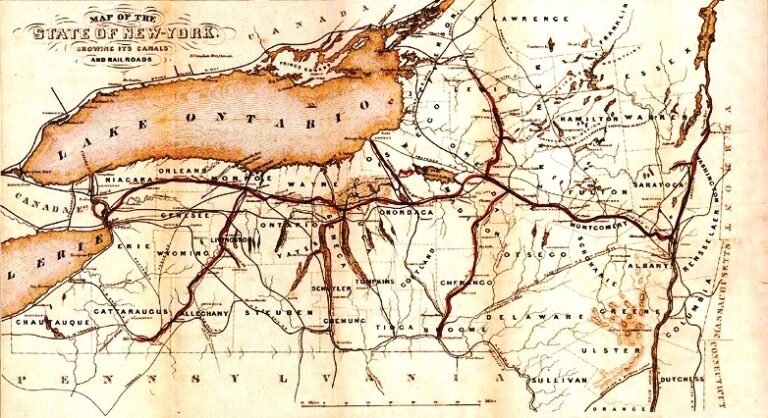
Consider the problem facing New York State in the spring of 1817. The legislature had just authorized the most ambitious public work the young republic had ever attempted — a canal 363 miles long, four feet deep and forty feet wide, to be cut clear across the state from Albany to Lake Erie. The one thing the state did not have was a single person qualified to build it.
This was not an exaggeration. America in 1817 had no civil engineers to speak of and no school that trained them. The U.S. Military Academy at West Point was barely a decade old and oriented toward soldiering. There was no manual to consult, no cadre of experienced canal men to hire, no precedent on the continent for locks, aqueducts, and embankments at this scale. The men who built the Erie Canal would have to teach themselves the profession while standing in the mud of the route — and in doing so, they invented American civil engineering.
The lawyers who learned to survey
The two men appointed to lead the work were not engineers by any definition that would satisfy a modern licensing board. They were a judge and a county surveyor.
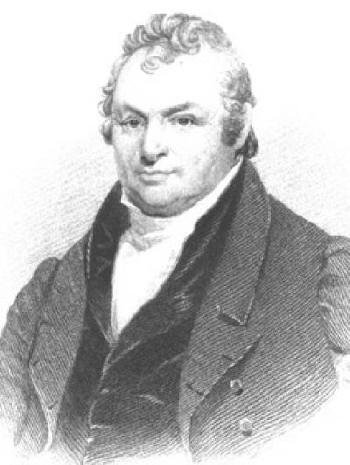
Benjamin Wright (1770–1842) had trained in the law and the rudiments of surveying while living with an uncle, then spent decades laying out land claims across the frontier of central New York. Along the way he served as a county judge and a state assemblyman. When the Canal Commission hired him at age forty-one to determine the route, his qualification was not a diploma but a lifetime of walking the ground with a compass and chain — experience gained, as one account puts it, largely by prosecuting and untangling land disputes. It was Wright who calculated that 363 miles of canal, with 83 locks, would be needed to connect the Hudson to Lake Erie. DeWitt Clinton appointed him chief engineer, and the American Society of Civil Engineers would later come to regard him as the “Father of American Engineering.”
His counterpart, James Geddes, had come to canal work by an even more roundabout path. A salt manufacturer and, for a time, the surveyor of Onondaga County, Geddes had conducted one of the very first Erie surveys back in 1808 — sighting a possible canal line across the state with borrowed instruments and self-taught technique. Like Wright, he had picked up surveying in the course of settling boundary quarrels. The two lawyer-surveyors divided the line between them, Geddes taking the western sections and Wright the east, and between them they set the grade for a waterway across an entire state without ever having built a canal in their lives.
The cement that had to harden underwater
Surveying the route was one problem. Making it hold water was another entirely — and it fell to a young assistant of Wright’s named Canvass White (1790–1834).
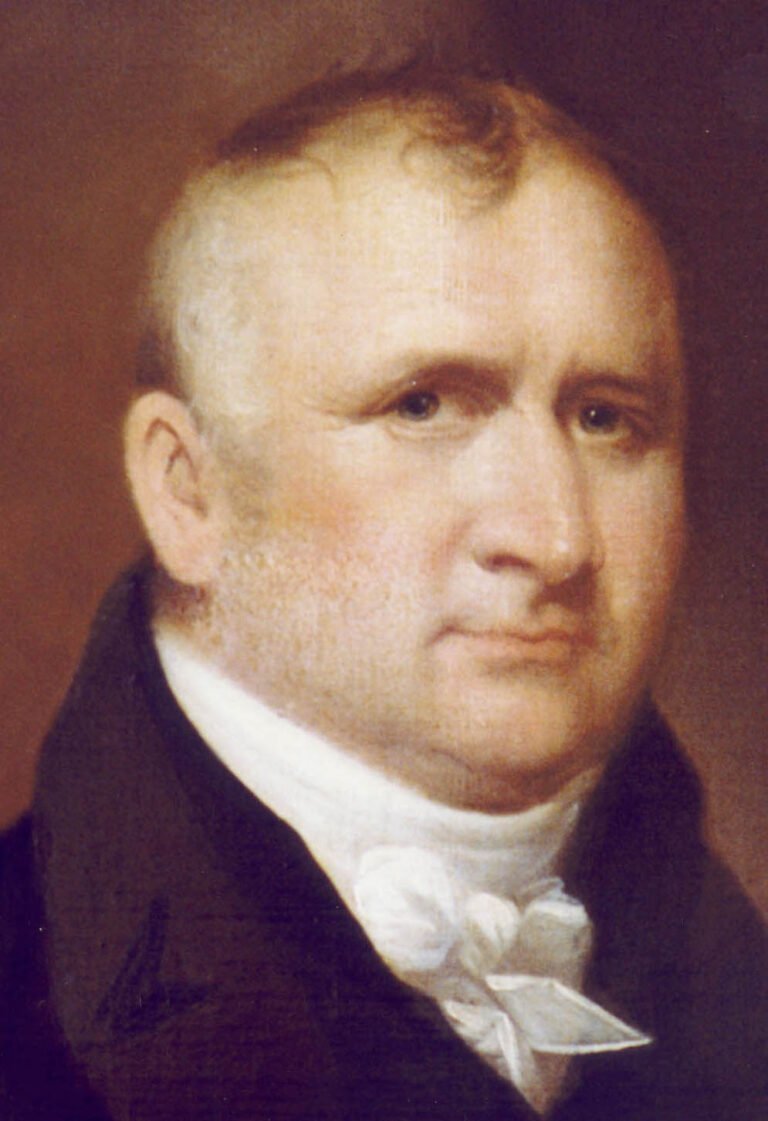
White’s story reads like something invented to flatter the era. He had studied mathematics, chemistry, and mineralogy at Fairfield Academy, then served as an army lieutenant in the War of 1812, leading volunteers in the assault on Fort Erie, where he was severely wounded before recovering. When canal work began, he attached himself to Wright and — at what several accounts describe as his own expense — sailed to England in 1817 to walk that country’s canals and study how their locks and masonry were built.
The lesson he brought home was chemical. European builders bonded their underwater masonry with a special “hydraulic” cement — a mortar that would set and cure underwater, rather than crumbling like ordinary lime mortar the moment it got wet. Locks and aqueducts were useless without it, and importing it from Europe would have been ruinously expensive. White was convinced the raw material could be found in North America. In 1818, back in New York, he located a suitable local stone — a dolostone near Chittenango — and worked out the process for burning and grinding it into a cement that hardened underwater, cheaply and, by contemporary accounts, better than the imported kind. He was awarded a patent for it in 1820.
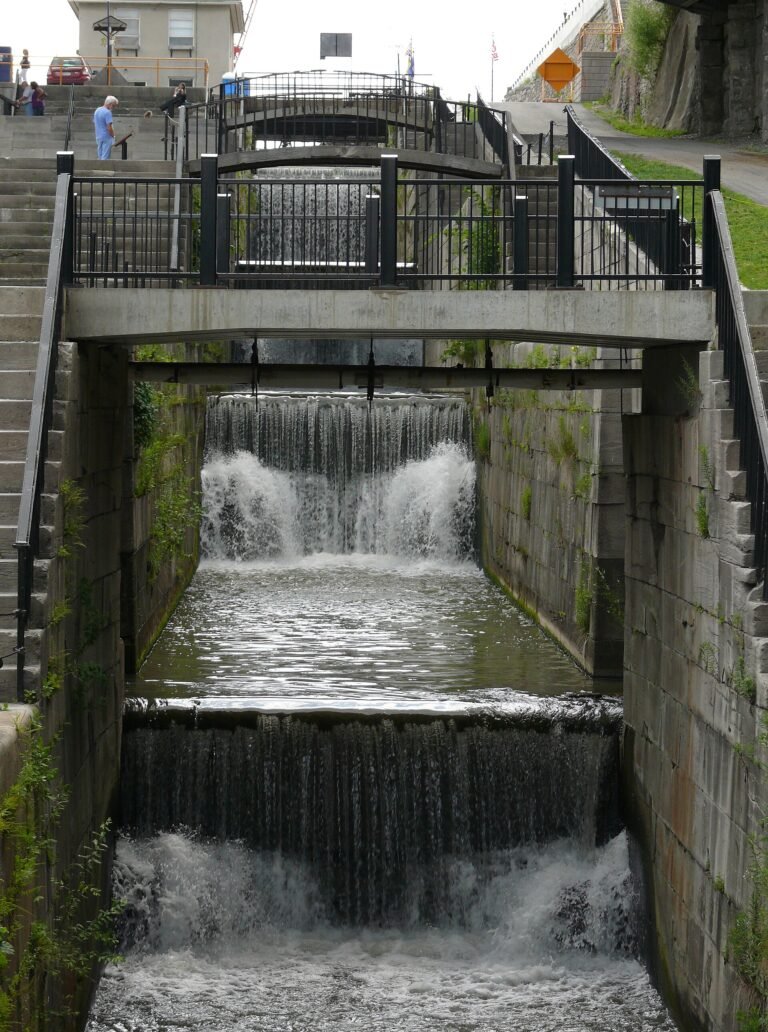
The impact is hard to overstate. More than 500,000 bushels of White’s cement went into the walls of the Erie Canal, binding every lock chamber and aqueduct along the line. Without it there is no canal — and yet the ending is a sour one. New York used his patented invention wholesale and, by most accounts, never paid him for it. The quiet breakthrough that made the whole enterprise watertight enriched the state and left its inventor fighting for compensation. You can see White’s work firsthand where the canal’s masonry meets the water at places like Lock E20 at Whitesboro.
The schoolteacher, the stump-puller, and the staircase
If any single figure embodies the improvised genius of the Erie School, it is Nathan Roberts — an itinerant mathematics teacher and land speculator who had taught himself surveying at Benjamin Wright’s urging, then talked his way onto the 1816 survey. He had no formal training in engineering. In this he was no different from any of his colleagues; as one canal historian flatly put it, every one of them learned the profession on the job.
Roberts’s gift was for turning a mathematical mind loose on a physical problem. The first great obstacle was the forest itself: the route ran through miles of standing timber, and behind every felled tree was a stubborn stump that had to come out before a boat could pass. Clearing them by conventional means was agonizingly slow. So Roberts designed a giant stump-pulling machine — a rig mounted on wheels sixteen feet in diameter, powered by oxen — that could tear out roughly forty stumps a day against about four by ordinary methods. It is a small, almost comic invention, but it is exactly the kind of ground-level ingenuity that kept a wilderness project moving.
His masterpiece came at the western end of the line, where the canal confronted the Niagara Escarpment — a wall of rock some sixty feet high that stood squarely across the path to Lake Erie. The engineers held a competition for the best way over it, and Roberts won with a design of startling elegance: not one lock but a “staircase” of five locks stacked directly atop one another, and — because a single flight would create a bottleneck — built as a double set, side by side, so that boats could climb and descend simultaneously. The town that grew up around it took its name from the works: Lockport. Put in charge of the canal between Lockport and Buffalo in 1822, Roberts saw his Flight of Five become the celebrated climax of the entire canal — the stretch travelers came specifically to marvel at.
The Erie School of Engineering
The men who rose through these ranks — clearing trees with an axe one year, laying out lock chambers the next — became known, in a phrase History.com preserves, as graduates of the “Erie School of Engineering.” It is a fitting name, because the canal genuinely functioned as a school. There was no classroom, no textbook, no certifying body; there was only the route, the problem in front of you, and the accumulated, hard-won experience of solving it. Learning happened in what one nineteenth-century chronicler called “the hard school of experience.”
What makes the story consequential rather than merely charming is what these self-taught men did next. The Erie Canal did not just move freight; it produced the first generation of American civil engineers, and they scattered across the continent to build the next century of it. Roberts went on to serve as chief engineer on the Pennsylvania State Canal and on works at Muscle Shoals on the Tennessee River. White became chief engineer of canals in Pennsylvania, New Jersey, and beyond. Wright’s reputation carried him from one major project to the next until the profession itself claimed him as its founding father. The apprentices they trained on the Erie — the rodmen and axmen who picked up the trade in the ditch — fanned out to lay the canals, railroads, and waterworks of a rapidly expanding nation.
That is the deeper achievement buried in the familiar tale of “Clinton’s Ditch.” The canal is rightly remembered for what it carried and for the cities it built, from Rochester to Buffalo. But its first and most durable product was the men who built it. A state with no engineers set out to dig an impossible canal, and by finishing it, manufactured the very profession it had lacked. The Erie Canal was America’s first great public work — and, just as truly, its first great engineering school.
Gallery
Sources
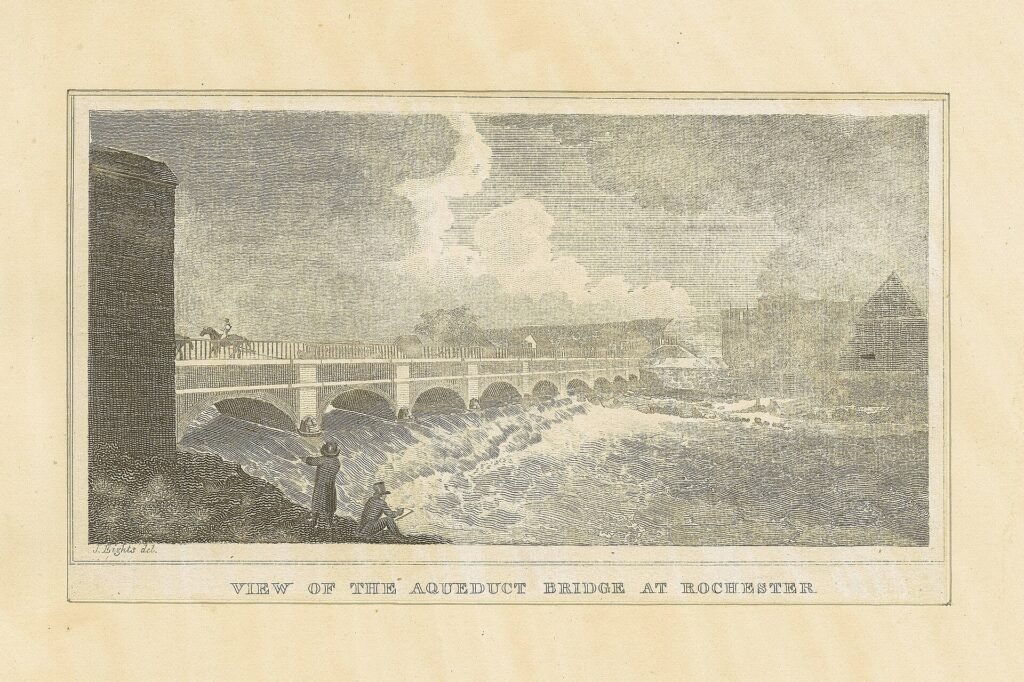
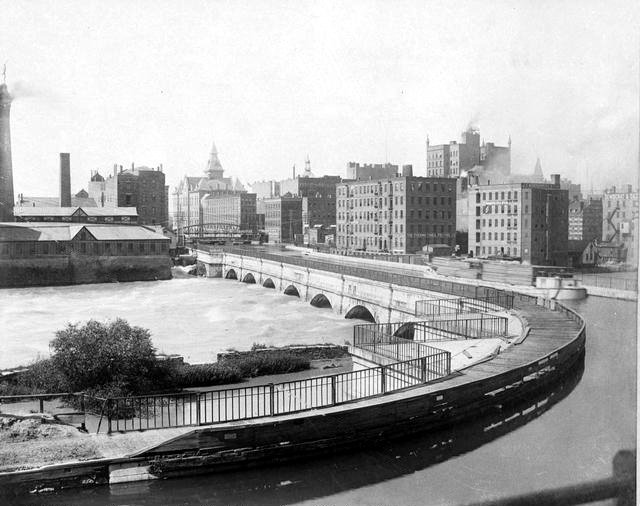
History.com, “Erie Canal Construction, Engineering & Labor” (Benjamin Wright & James Geddes as self-taught lawyer-surveyors; Nathan Roberts, former math teacher, stump-puller with 16-ft wheels removing ~40 stumps/day vs ~4; Lockport double staircase of five locks; Canvass White’s trip to England and hydraulic cement; “Erie School of Engineering” phrasing) — https://www.history.com/articles/erie-canal-construction-engineering-labor. ASCE, Notable Civil Engineers — Benjamin Wright (1770–1842; law/surveying background; hired at 41; calculated 363 mi, 83 locks, 40×4 ft; “Father of American Engineering”) — https://www.asce.org/. eriecanal.org / Whitford, History of the Canal System of New York, Chap. XXIV (Geddes as Onondaga County surveyor, first survey 1808; Wright judge/surveyor “Father of American Engineering”; White began under Wright, traveled to England at personal expense; Roberts’ double-combined Lockport locks; engineers had no formal training, learned in “the hard school of experience”) — https://www.eriecanal.org/texts/Whitford/1906/Chap24.html. Waterford Historical Museum & ASCE / Wikipedia on Canvass White (1790–1834; Fairfield Academy studies; War of 1812 lieutenant wounded at Fort Erie; dolostone near Chittenango 1818; hydraulic cement patented 1820; 500,000+ bushels used; never paid by NY) — https://waterfordmuseum.com/canvass-white/ and https://en.wikipedia.org/wiki/Canvass_White. Lockport Journal, “Erie Canal Discovery: Nathan Roberts, canal engineer” (itinerant math teacher/land speculator; taught himself surveying at Wright’s urging; hired for 1816 survey; put in charge Lockport–Buffalo 1822; later Pennsylvania Canal and Muscle Shoals) — https://www.lockportjournal.com/. Note: the designer of the first Rochester Genesee River aqueduct (completed 1823) could not be cleanly attributed to Nathan Roberts across sources, so no designer credit for that structure is asserted here.