How to Lock Through the Erie Canal
The locks are the part new canal boaters fear most — and the easiest part of the trip. A first-timer’s step-by-step guide, from hailing on VHF 13 to idling out the far gates.
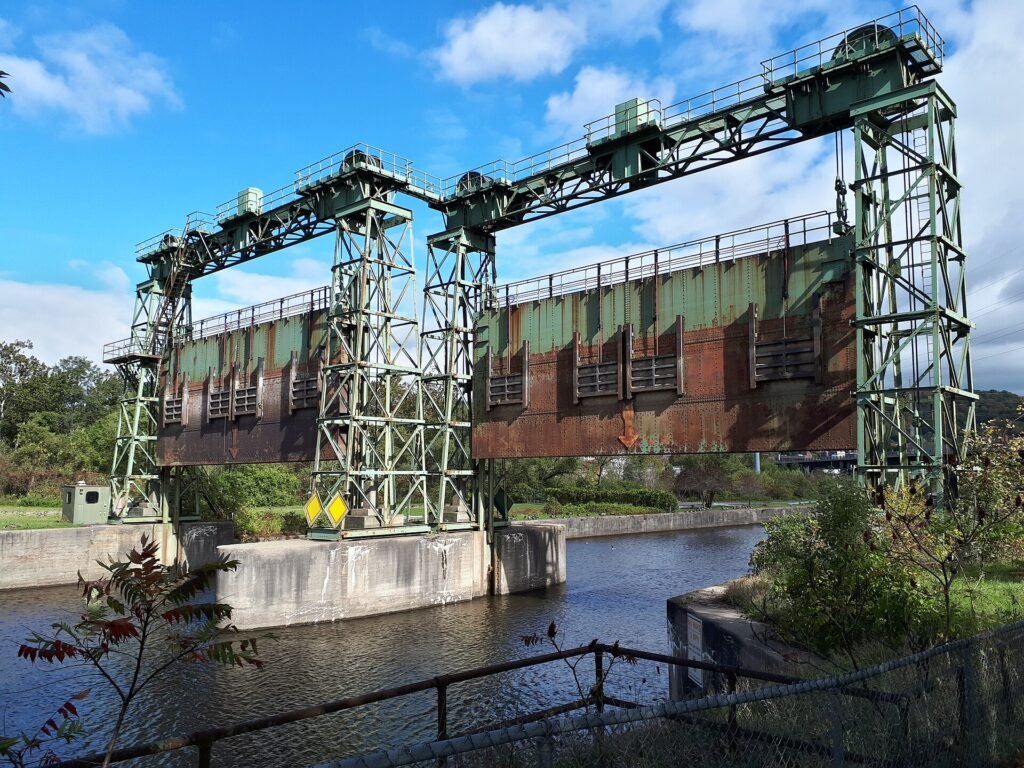
Ask a first-time canal boater what worries them, and it’s almost never the open water — it’s the locks. All that concrete, the gates, the drop, the audience on the wall. Here’s the secret every canal veteran will tell you: locking through is the easiest part of the trip, and after your first one you’ll wonder what you were worried about. A lock is just an elevator for boats. Here is exactly how to ride it.
What a lock actually does
The Erie Canal climbs from the Hudson at Troy over a height of land and back down to Lake Erie — and a lock is how your boat goes up or down between two stretches of water at different levels. Running west (toward Buffalo) most locks lift you; running east they lower you. You idle in, the gates close behind you, and the chamber fills or drains until you’re level with the next stretch. The whole thing takes about 15 to 20 minutes, and the lock operator runs it — your only job is to hold your boat against the wall while the water moves.
Before you reach the lock: have this ready
- Fenders down on the wall side (and it’s worth rigging both sides — you don’t always know which wall you’ll be sent to).
- Two dock lines ready, bow and stern, with a crew member on each.
- Gloves on. The chamber walls and the lines are wet, slimy, and rough — gloves save your hands.
- A boat hook within reach.
- PFDs on for anyone working the lines, and VHF radio on channel 13.
Step by step
- Hail the lock. As you approach, call the lock operator on VHF channel 13 — give the lock’s name and number. Most locks will also take a phone call or a request through the state’s On the Canals app, and a horn signal works if you have no radio. Then wait off to the side for your light.
- Wait for the green light. A red light means the lock isn’t ready — hold your position. Green means come in.
- Enter slowly. Idle into the open chamber and bring your boat alongside the wall the operator directs you to.
- Take a line — but don’t tie it. The lock provides ropes, cables, or pipes recessed into the wall. Loop your line around one and hold it by hand. Do not cleat or tie off: the water level is about to change several feet, and a fixed line is how boats get into trouble.
- Ride it up or down. The gates close, the water fills or drains, and you simply tend your lines — taking up slack as you rise, easing it out as you fall — to keep the boat snug against the wall.
- Idle out. When the far gates open fully, take in your lines, push off, and motor slowly out. That’s it.
The safety rules that matter
Two centuries of lockages have taught the canal exactly where people get hurt, and the rules are short: never wrap a line around your hand or any part of you, and never use your hands or feet to fend the boat off the wall — use the boat hook. Keep hands and fenders inside the rub rail. Let the operator set the pace; on a busy day you may share the chamber with other boats, so follow their directions on where to tie up.
The practical frame
A few numbers that make the day go smoothly. The 2026 navigation season runs May 15 to October 14, with locks and lift bridges operating 8 a.m. to 6 p.m. (later at some locks in mid-summer) — see our season and hours guide. There are no tolls or fees for recreational boats. Plan on a canal cruising pace of about 10 mph, and idle speed inside the chamber. Air draft is the one hard limit to check before you commit to a route: fixed-bridge clearance across the system runs roughly 15½ to 21 feet, so plan to your route’s lowest bridge — see the lift bridges along the way. Keep VHF channel 13 on the whole time you’re on the water.
Want to make your first lock a memorable one? Point west and start at the Waterford Flight — five locks in under two miles, one of the highest lock flights in the world — or run the gorge at Lock E17 in Little Falls, the highest single lift on the canal. Read up on the whole system in our guide to boating the Erie Canal, and browse every chamber on the locks page. Then go ride the elevator. You’ve got this.
Sources
Locking procedure (hail on VHF 13 / phone / On the Canals app / horn; green light; loop lines, do not tie; fenders; gloves; no hand/foot fending) + safety: NYS Canal Corporation Boater's Guide (canals.ny.gov/Boating-Information, /Navigation-Information) + Erie Canal Guide's /plan/boating. Season May 15–Oct 14 2026, hours 8–6, no tolls: canals.ny.gov Boating Hours. Air draft ~15½–21 ft system range: canals.ny.gov.